Kar Jaa, Mar Jaa, ya Amar Jaa
52+ shades of grey.

I am in the midst of an existential crisis.
I tell my friend, let’s call him Krishnamurti with a J, and he throws a cocktail of affection and affliction at my face, “You, my friend, are not having an existential crisis. You are having an ‘exit-ential’ crisis. You don’t know when or how to leave. You jump from one thing to another, caught in an infinite loop of arrivals. Entering, residing — inside your body, mind, feelings, and bandhans. You need to learn to leave, because life is a series of exits.”
Ouch.
He’s right. I don’t know how to leave…yet. And so do some people around me. The ones who really need to ‘exit stage left’ — ASAP, but they won’t. And then I realise — it’s not just some of us, we, as humanity, have an issue with leaving. We goddamn well relish bringing people into the world without their consent, but have a problem if they wish to leave with it.
Leaving like leaves
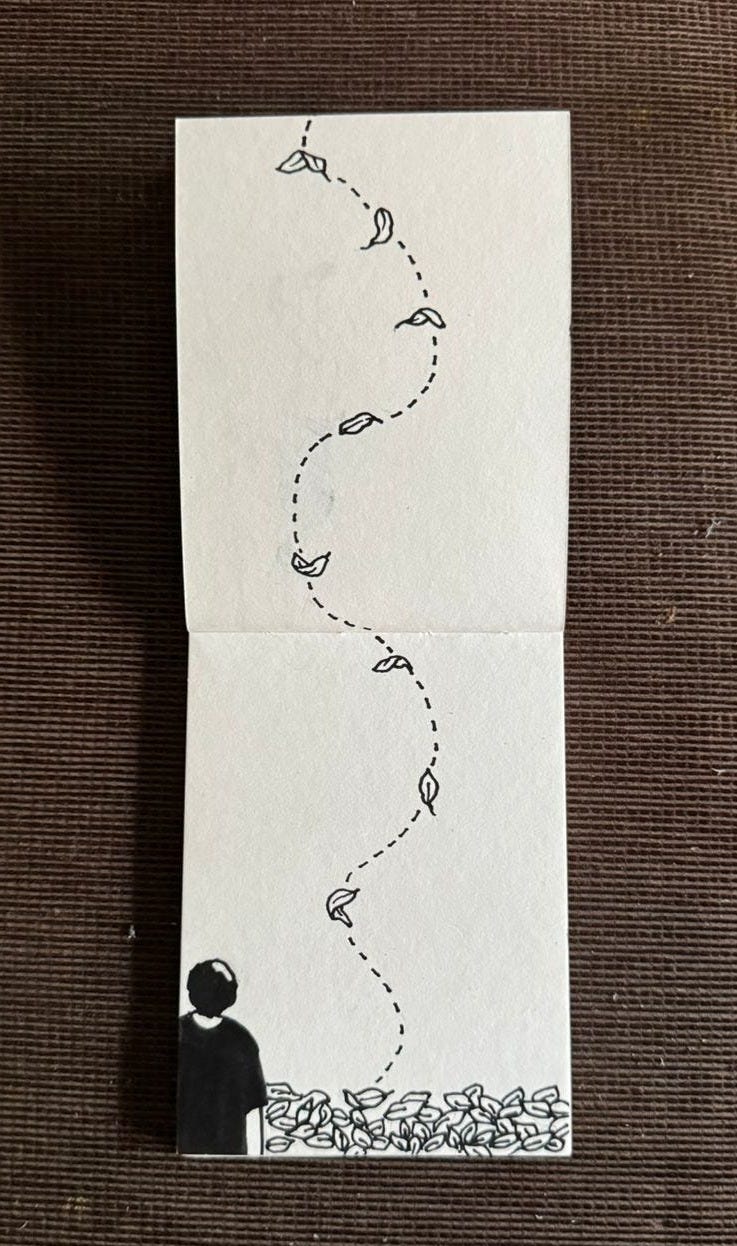
I say, “This might be the last time we might be meeting,” to a loved one. She says, ‘You say this all the time.’ Maybe we have forgotten how to leave well and say final goodbyes. Every language I speak, learnt, or am related to speaks of leaving and coming back. “Achha main aata hoon”, “Velli osthānu”, “Hogi bartīni”, “Pōyi varāṁ”, “Poittu varaen”, “Au revoir”, “Dasvidanya”. We are so petrified of leaving that we need to buttress it with the possibility of meeting again. Of seeing again. Of being again.
The case for willful leaving (Euthanasia) usually only arrives draped in compassion, meant for people in com(m)as that never fully stop, vegetative states and meditative fates, ages in body cages, souls trapped in one piece but with no peace.
The argument, more often than not, is about alleviating the pain and suffering of the dying and their caretakers. But what if we saw these acts of leaving as release, but as joy? Not sadistic — but liberatory, of finally losing and loosening a lifelong grip. Maybe euthanasia isn’t about continuing to live — perhaps it’s about starting to leave.
When my father died, I think my mother became lighter. I imagine her sleeping deeply, resting well. Her breath evening out at night, her BP no longer rising with the sunrise. And I don’t think her calm came from stopping loving him — that might have happened long before his demise. It might have come from finally not having to negotiate her existence around his moods.
Fall from greys
I remember my beady-eyed and beady-headed friend again. “You don’t know how to fall. If you don’t know how to fall the right way, you’ll never fall off the right way —like a falling leaf.” We’ve forgotten the art of falling. Instead, we’ve mastered the art of clinging on.

Uncles in our lives — literal and shambolic — refuse to fall. The salaried, middle-class ones whose sons work in Bangalore and daughters in Berlin. The ones who berate the billionaires while stocking up their own coffers. They like to stand up for things they believe in.
They cling to authority, family WhatsApp groups, mutual funds, and the belief that the world they built still functions. They speak of sacrifice but live off pensions and tensions from a system they now call corrupt. They forward memes about saving Bharat while hoarding like there’s no tomorrow — because for them, there are only tomorrows.
Why can’t they let go? Why do we insist on going late, much later than what would be optimal or graceful? Agreed, many of the oldies have faced hardships and scarcity that I have never. However, that’s no excuse to not mature as contexts change.
Would it be too cruel — or Thanos-y — to say that maybe a few of these uncles vanishing could actually be good — for them, for their families, maybe even for the planet?
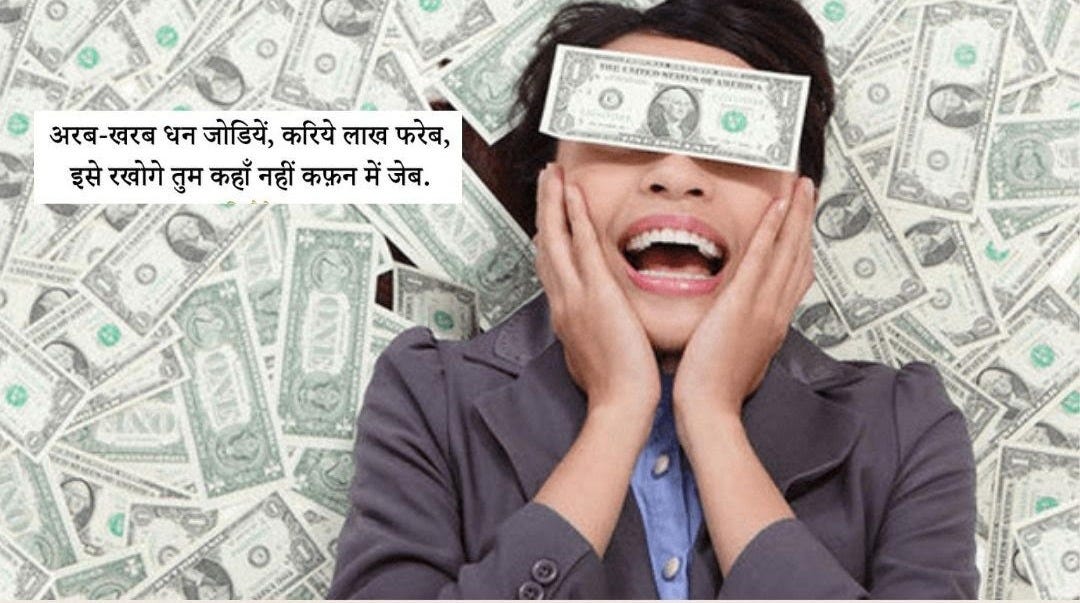
(Hoard billions, cheat a million times,
But tell me—where will you carry it when you die?
Even the shroud that wraps you
comes without a pocket.)
Old was once bold
This refusal to fall isn’t just personal; it’s structural. It plays out in how entire generations hold on to power, land, and wealth.
For centuries, some of our elders have been the keepers of wealth. Sure, many misused that custodianship in unimaginably terrible ways. But communities living close to the land were more egalitarian and just. Where everything was seen as one and not to be owned. Land, forests, rivers, mountains — once shared, now fenced.
Now, attention is stolen and currency is hoarded. And hoarded money doesn’t rot. It simply grows stale — breeding resentment and dependence when it doesn’t circulate. Globally, a massive wealth transfer is underway, though much of it sits locked in the accounts of thousands of uncles. In India, too, old money sits in fixed deposits while social do-gooders need resources now — not lessons, not later.
Instead of giving now, the old prefer to give later, as an inheritance. Because we must “earn it the hard way.” Because they confuse struggle with virtue. What they don’t realise is that by holding on, they don’t just hold wealth — they hold time. Kaal. They slow the circulation of resources that could be regenerating ecosystems, economies, and emotional lives — now.
kaal kare so aaj kar,
aaj kare so ab,
pal mein pralay hoyegi,
bahuri karega kab
- Kabir
In an ideal agrarian or arboreal rhythm, wealth wouldn’t and couldn’t be hoarded. It had to flow. You plough land, share grain, and exchange labour. Aging wouldn’t mean withdrawing into a 3BHK with savings; it would mean becoming a custodian of soil, of continuity, of care, and not sitting idle while the world burns and your legacy curdles.
In today’s consumer economy, the elderly’s carbon footprint grows as their social footprint shrinks. We’ve turned vanaprastha — the ancient forest retreat, the third stage of life meant for reflection and release — into vana-nirodh, an ill-treatment of our forests.
If they all disappeared tomorrow, we’d probably miss them too. Not because we need their wisdom, but because we’ve built ourselves against them. They are the resistance we train on, the cautionary tales we cite, the proof that we’re doing something different. After all, who would Kunal Kamra make fun of? Who would remind us what we’re rebelling against? We’d have to find new antagonists, or worse — become them.
I say “them” as if I’m not already one of them. I am an uncle myself, statistically. Physically, I became one when puberty hit me with a walrus moustache at 13. Behaviourally, I have been an uncle all my life. All I want to do is read a newspaper, do the jumble and sudoku earnestly, but cheat on everything else, have infusion teas, and be unnecessarily cranky.
The question isn’t whether I’ll become an uncle — I already am one. The question is: what kind?
If I, and others like me, aren’t mindful, we will, with our behaviours unchecked, become the uncles and aunties of tomorrow. We will become exactly what we mocked. We’ll hoard attention instead of wealth, clout instead of land. We’ll gatekeep creative opportunities the way they gatekept capital. We’ll demand respect for our “journey” while dismissing others’ struggles. We’ll become the fossils we once resented.
And that’s how the uncle Lao Tzu warned us long ago…
Watch your thoughts, they become your words; watch your words, they become your actions; watch your actions, they become your habits; watch your habits, they become your character; watch your character, it becomes your destiny.
A Case for the 52+ Parindey Fellowship
I catch myself mid-rant.
Rants are raunchy, but they alone do not create revolutions. If I must critique, I must also imagine. Because to dismiss all uncles as worthless would be to fall into the very trap I’m critiquing — the trap of stereotyping, of flattening complexity into caricature.
The truth is, there’s an entire industry in India catering to “youth” — fellowships, programs, workshops, volunteering opportunities. Dear friends at Travellers’ University offer the 52 Parindey fellowship for young changemakers. The social sector is flush with incubators, accelerators, and leadership programs for anyone under 35.
But what about those over 50?
The middle-aged and elderly are typecast into a single role: funders. The social sector sees their bank accounts before it sees their skills, their networks, their decades of institutional knowledge, their hard-won wisdom about what works and what doesn’t. We reduce them to QR codes with opinions. By typecasting elders as only financial contributors, we inadvertently reinforce the very hoarding behavior we resent.
So what would a 52+ Parindey fellowship look like?
Not a seniors’ club. Not a heritage tourism package. Not a “give back” program that’s really just a euphemism for “give money and feel good.” But a real fellowship — where people freed from certain bandhans, like my mother, could travel, learn, unlearn, and meet people of all ages, sizes, and shapes who are doing good for themselves, their communities, and maybe the planet.
My own blindness is that I have been too quick to judge. Perhaps, many elders want to do good — who wish to contribute beyond their financial capital — but feel there aren’t enough avenues that truly respect what they have to offer.
We haven’t created the infrastructure, the safe spaces, the genuine invitations for elders to participate as full humans, not just as patrons. We’ve built a world where 22-year-olds get fellowships to “find themselves” and 65-year-olds get brochures for retirement homes.
My mother, almost 70, is freer now than she’s ever been.
What if there were fellowships designed for that exact moment of liberation? For the newly widowed, the newly retired, the newly rebellious, the ones who’ve spent decades being someone’s wife, someone’s employee, someone’s expectation — and are now ready to be, simply, themselves?
What if, instead of waiting for them to die or donate, we invited them to live and participate? To be co-travelers. To learn alongside, not above. To bring their capital — social, intellectual, experiential, and yes, sometimes financial — into circulation, not as a gift from on high, but as part of a genuine exchange.
Kar Jaa, Mar Jaa, ya Amar Jaa
Uncles and aunties, this call to you isn’t to mar jaa, but to kar jaa — or amar jaa.
If you can’t dissolve your ego, at least put it to work. Use your pensions, your skills, your time to rebuild what your generation helped erode. Fund the forests, not another trust in your name. Pass on your knowledge, not your nostalgia. Circulate your wealth while you’re alive to see it work. Mentor without mansplaining. Support without strings.
Let your death, when it comes, be light. And if you still can’t — if you cling to your wealth and your versions of God — then at least die with awareness. Die knowing you were part of something that could have transformed, but didn’t.
And to those of us still building the world, create the fellowships. Design the programs. Make the invitations genuine. Hold space for the complexity of aging, for the possibility of transformation at any age, for the reality that some elders are assholes because we’ve given them no other role to play.
I don’t have a father anymore who can disagree with me. So I’ve found a proxy one. Similar to my dad, he quotes Kabir and Diogenes with equal irritation, scolding me for not living by the Gita’s principles of detachment. He is alive, flawed, and clear in his motto: kar jaa.
Mar Jaa — to what no longer serves.
Amar Jaa — by letting what’s good outlive you.
Kar Jaa — while you still can.
Written by Sada Hasna Manto.
This is so good 🧡 and it was fun reading. you mentioned about below 35 and above 50, what about 35-50🙈😅 ?